What do I do with Mom's Cremated Remains?
Adrienne M. Kloecker • August 10, 2020
Options For Cremation
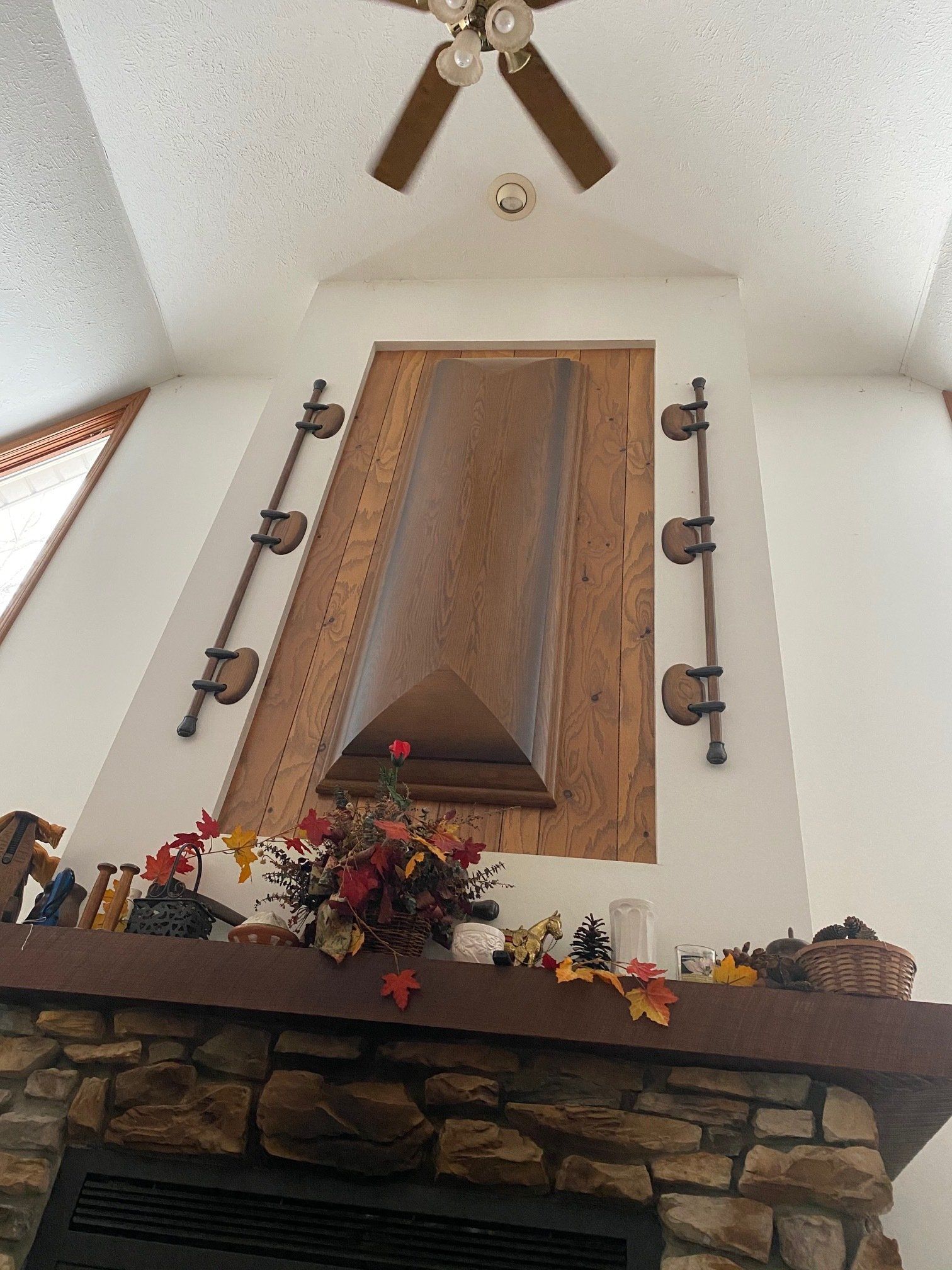
In 1996, my grandfather, Francis V. Kloecker, Jr. built his dream camp on a piece of land given to him by his Father. It sits up on a small hill overlooking the Six Mile Creek in Harborcreek, PA. We have one very unique design inside the camp. Above the mantle, there is a gorgeous oak lid to a full size casket with the handles on either side of the lid, soaring up to the top of the cathedral ceiling. It’s only appropriate for a funeral director to include this type of furnishing inside his camp. Ever since I can remember, every time we brought a friend to our camp for the first time, we would tell him or her that my great-grandfather is inside the casket on the wall. Each person is always shocked and kind of disturbed! Of course, after a few minutes of convincing, we then laugh it off and tell them that we are just joking.
Call Now To Set Up An Appointment!
CJ's Story Article
Wilbert Urns Website
When you think about it, many people actually do have their family members up on the mantel, the difference is that their loved one is in an urn instead of a full size casket. Many people don’t understand and most times have never been explained the different options of what to do with cremated remains.
There are three main options when it comes handling your loved ones cremated remains. The first option is scattering or spreading the cremated remains. Many people love this option. It doesn’t cost anything extra and it can be a very personalized experience. Let’s say your loved one always spent time at his/her camp, spreading cremated remains at the camp would be the perfect spot. Many people create a little area with memory stones or plant a tree at the place that the cremains were spread. If you are thinking of spreading cremains in a public place, you need to ask permission. There is a great article on CJ Twomey, who passed away in 2010. Since his death, CJ’s cremated remains have been scattered in more than 100 countries. His cremains were even sent into space! The link to the article can be found at the end of the blog. Scattering is a very personal decision for the family or for yourself.
Another option is keeping the cremains at home. We often do not see families keeping all of the cremains in one urn or container at one home. Typically there are two or more family members involved and each person usually wants their own portion of the cremains. Nowadays there are so many different urns, small mementos, necklaces, rings, and even customized glass blown decorative pieces with cremains inside. You can take a look at the Wilbert selection that we offer for cremation choices, just click on the link at the end of the blog.
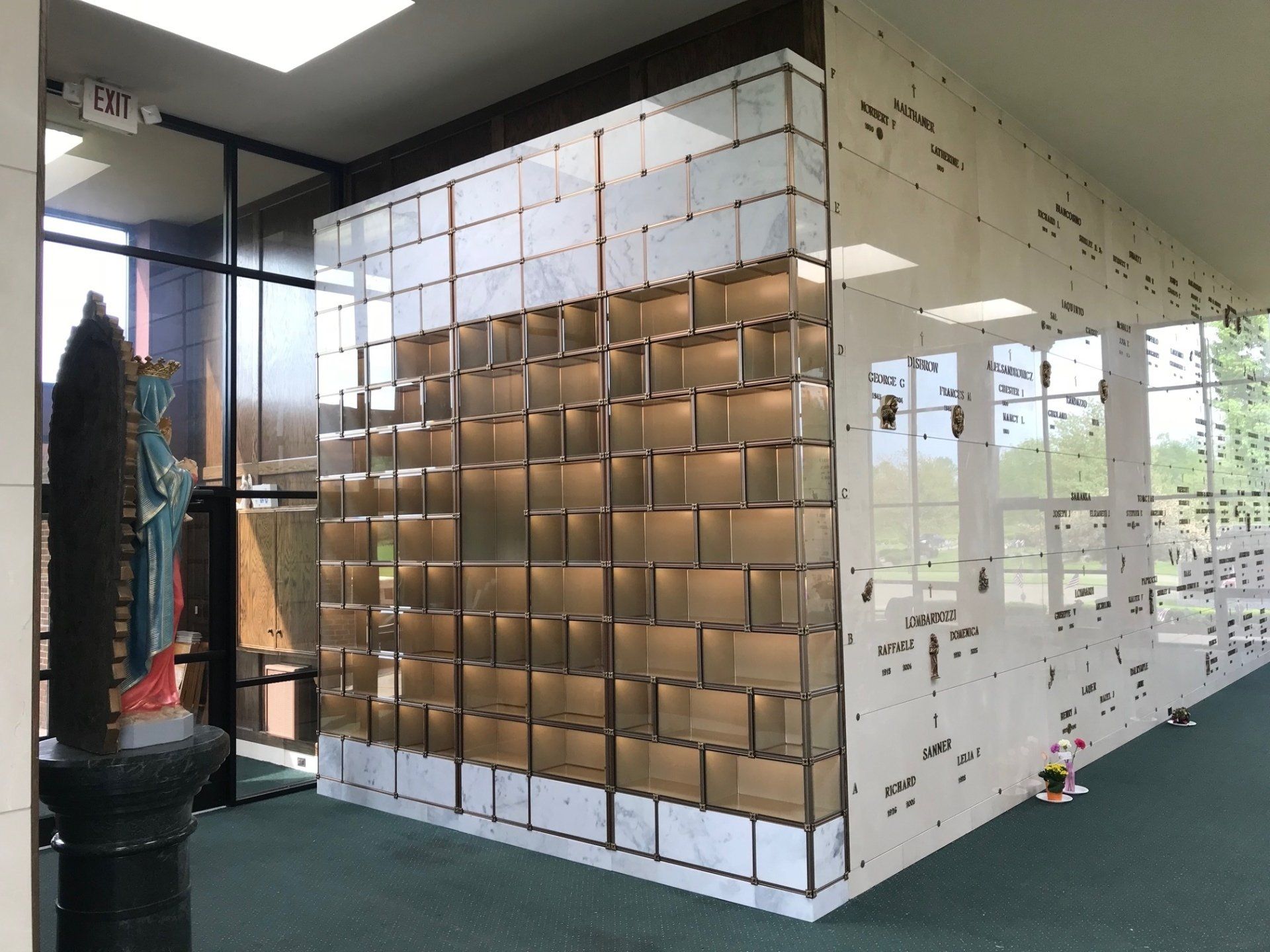
Finally, cremated remains can be placed into the ground at a cemetery plot or into a columbarium niche. Both of these options are more permanent locations for the cremated remains. I say “more permanent” because there is always an option to move the cremains out of that location. Most of our cemeteries in Erie, PA have one or multiple columbariums to put cremated remains inside. A columbarium is a large wall-like structure that have separated spaces, or what we call niches, for cremated remains to go inside. The costs that apply to using a columbarium niche include:
1. Purchasing the niche itself.
2. Opening and closing costs at the time of death.
3. Engraving the front of the niche usually with full name, date of birth, and date of death.
*For actual costs of niche and engraving, contact the cemetery of your choice.
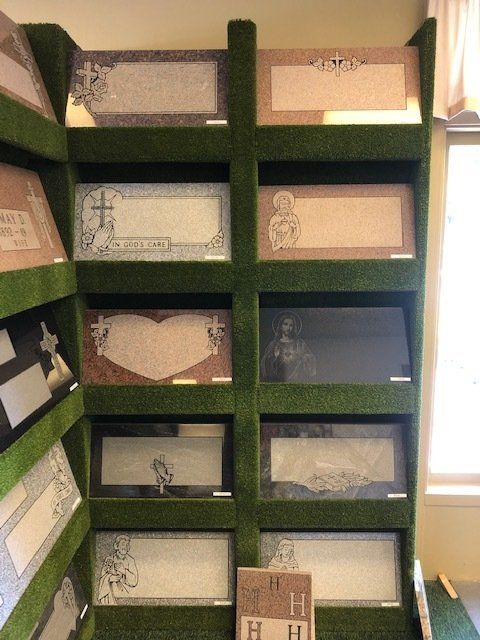
Ground burial of cremated remains has similar cemetery costs. Some cemeteries have cremation plots available instead of buying a full sized plot. Although it is not required by most cemeteries, many families choose to purchase a cemetery marker or stone for the grave. Geiger & Sons in Erie, PA, will always be our go-to, family-owned business for cemetery monuments. They always do an excellent job, and have been trusted by our family for generations.
If you are trying to decide what you want to happen with your cremated remains when the time comes, I have three words of advise… Write It Down! Make your wishes known on paper and discuss it with your family or with whomever will be in charge of the decisions when the time comes. Too often I hear from families, “I don’t know what Mom wanted.” or “Does Dad have a cemetery plot?”. Leave your family with some direction and write it down. If you are looking to be even more proactive, you are welcome to schedule an appointment with me and even pre-pay for all of your funeral wishes.
Bringing a New Face to the Funeral Business
Adrienne Kloecker


Why You Should Call Three Funeral Homes Before Making a Decision When someone dies, most families are faced with making a lot of decisions in a very short amount of time. Who do we call? Burial or cremation? Do we have a viewing? What does everything cost? What would Mom or Dad have wanted? In the middle of grief, it can feel like you need to make a decision immediately. But unless circumstances require otherwise, you have the right to slow down, ask questions, and make an informed decision. One piece of advice I often give families is simple: Call three funeral homes before deciding who you are going to use. Even if you think you already know which funeral home you will choose, those three phone calls can give you valuable information and, more importantly, confidence in your decision. 1. Funeral Home Prices Can Vary Funeral homes are required to provide pricing information, but prices can vary considerably from one funeral home to another. When you call, don't just ask, "How much is a funeral?" Explain what you're considering. Are you looking for direct cremation? A viewing followed by cremation? A traditional funeral with burial? A memorial service? Ask what is included in the price and what additional expenses you should expect. The lowest number you hear isn't necessarily the best value, and the highest price doesn't necessarily mean you're receiving the best service. The goal is to understand what you are paying for and what you are receiving. 2. You Get a Feel for How the Funeral Home Communicates Pay attention to how you are treated during that first phone call. Were your questions answered clearly? Did you feel rushed? Did the person take time to explain your options? Did you feel like you were talking to someone who genuinely cared about what your family was going through? A funeral home is going to be guiding you through some very difficult days. Communication matters. If you don't feel comfortable asking questions during the first phone call, you may not feel comfortable asking them later either. 3. Not Every Funeral Home Offers the Same Options Families are sometimes surprised to learn how differently funeral homes operate. One funeral home may have its own crematory while another uses a third-party crematory. Some funeral homes may offer more flexibility with visitation, personalization, religious services, celebrants, or cremation options. Ask questions such as: Where will my loved one be cared for? Who will be taking care of them? If cremation is chosen, where does the cremation take place? What options do we have for a viewing or service? You aren't being difficult by asking these questions. You are trusting someone with a person you love. You deserve to understand what happens next. 4. Comparing Funeral Homes Isn't Disrespectful Sometimes families feel uncomfortable calling multiple funeral homes. They worry that they're "shopping" for a funeral and that somehow feels wrong. It shouldn't. We compare options before making almost every other major financial decision in our lives. A funeral should be no different. You aren't buying a television or shopping for a car, of course. You're making an emotional and financial decision during one of the most difficult moments your family may experience. That is exactly why you should feel comfortable gathering information before making it. A good funeral director should respect that. 5. Price Shouldn't Be Your Only Question Cost matters. Families have budgets, and funeral expenses can be significant. But after calling three funeral homes, you may discover that your decision isn't based solely on price. Maybe one funeral home is a little more expensive, but you feel much more comfortable with the person who answered the phone. Maybe one explains everything more clearly. Maybe another offers something that is especially important to your family. The question isn't simply: "Who is cheapest?" A better question is: "Who do I trust to take care of my loved one and my family?" You Have a Choice One of the most important things families should understand is that you have a choice in which funeral home you call. You don't need to make that decision based solely on who your family has used before, who is closest, or whose name you recognize. Ask questions. Compare prices. Compare services. And pay attention to how you are treated. At Kloecker Funeral Home & Crematory, we believe educated families make better decisions. We would rather have you ask ten questions before choosing us than feel like you weren't given enough information to make the right decision for your family. So, when the time comes, call three funeral homes. Ask the same questions of each one. Then choose the funeral home that gives you confidence that your loved one — and your family — will be treated with dignity, honesty, and genuine care. And if one of those three calls is to us, we'll be happy to answer every question you have — whether you ultimately choose Kloecker Funeral Home or not.

Starting the end of life conversation with a parent is hard. Adrienne Kloecker Kalivoda shares how to have this talk without waiting until it is too late.

Not sure what happens at a funeral arrangement meeting? Adrienne Kloecker walks you through exactly what to expect, step by step, so you can walk in prepared.
Has the digital age "buried" the traditional printed obituary?

It’s a moment so many of us face — one that’s heavy with emotion, worry, and love. Trust me, I've been there, it wasn't my mother but I was personally responsible for a woman. That first drive away from the nursing home is full of mixed emotions. Relief - because you finally found a place you feel comfortable leaving your loved one. Disappointed - because you feel like you have given up on them. Financially Burdened - because you know this is going to cost money. It is a hard turning point. And after the dust settles, another question quietly rises: “What happens next?” For a lot of families I talk to, this is when they begin thinking about planning ahead — not because they want to, but because they know they need to. I’ve sat at the table with sons and daughters just like you — people in their 50s, 60s, sometimes even younger — who suddenly find themselves facing decisions they never expected to make this soon. Let me walk you through what I often tell them. ⸻ You Don’t Have to Make All the Decisions Today First, take a breath. Pre-arranging a funeral isn’t about locking everything in right now. It’s about easing the burden later — for both you and your family. Making even some basic choices now — like whether your mom prefers burial or cremation, or if she wants a service — making these decisions can make a difference when the time comes. ⸻ Start With a Conversation This might sound hard, but one of the best gifts you can give your loved one is a chance to have a voice in what happens. Even if she doesn’t want to talk details, just asking “Is there anything you want when the time comes?” opens the door. You don’t have to talk about caskets or music — just values. Does she want something simple? Religious? Family-focused? You’d be surprised how many people feel relieved just to be asked. ⸻ Pre-Planning Is Flexible — and It Moves With You One of the biggest concerns I hear is: “What if we make pre-arrangements and something changes?” That’s a fair question — and the good news is, most plans are flexible. If your mom moves to another city or state, or if your family changes its mind about the details, pre-arrangements can be transferred or adjusted. The point of planning ahead isn’t to lock you in — it’s to give you options and ease, no matter where life leads. ⸻ You’re Not Alone in This If you’re reading this, chances are you’ve got a lot on your shoulders. I just want you to know: you don’t have to carry it all by yourself. When families come to me, I listen. I learn about their loved one. I answer questions with honesty and heart. I’ve been through this personally — and I bring that experience to every conversation I have. So whether you’re ready to sit down and make arrangements or you just need someone to talk through the “what-ifs,” I’m here. ⸻ Let’s make this next step a little easier, together. 📞 Feel free to call or stop in anytime. I’m happy to sit down, no pressure, and help you start the conversation — at your pace, in your time.

Happy New Year to all! 2024 marks my fourth year of providing meaningful blogs through “A New Face to the Funeral Business.” Every year I make it a goal to write more blogs than I did the year before, but usually life gets busy. For example, birthing another child and some more or less exciting obstacles get in the way. However, as I look back and see the blogs written in the past, I realize that I was prompted by an experience that I just HAD to share. I find that sharing experiences is much more meaningful than giving lessons, how to’s, and tips on funeral services. A few months ago, Francis and I had the pleasure of welcoming a group of Seminarians from St. Mark’s Seminary in Erie for a “Day in the life” and tour of the funeral home. When Fr. Renne, Associate Director of Seminarians, asked Francis and I to talk to the seminarians, my initial reaction was what on earth do you want us to talk about? The more I thought about the opportunity to sit down with future priests, the more I thought, you know what—I bet they have never heard the funeral director’s side of what makes a meaningful funeral. Of course the traditions, the symbols used during the Mass, the participation of family members during the service, etc. all play a huge role in making a meaningful funeral, but why is all of that important? What are families really looking for in a funeral service? People love to use the phrase a “Celebration of Life.” Of course that is the preferred way to say funeral—the very nature of the words make the “event” less sad. Some definitions of “Celebration of Life” describe it as a primary focus on the life that the loved one lived. Some say it’s less rooted in tradition and focuses on celebrating the life. Most people think that a Celebration of Life and a Funeral are two different events. Let’s be honest, whenever a gathering occurs and the purpose of the gathering is to remember and honor a person who passed away, that event is going to be sad. That is the point of a funeral. A funeral is a safe place to have those feelings, to cry, to mourn the death, to be with family and friends, to tell stories, to laugh, and then to cry again. It is necessary for families to have a funeral, but it does not look the same for every family, and that is okay. There are plenty of families that want visiting hours and a service at the funeral home instead of at a church. There are families who would prefer having more of a party style “Celebration of Life” at a restaurant or bar. Some want a combination of both. No matter what, there is a need to hold some sort of an event for the specific purpose of remembering the person who died. When a family goes without having any funeral, that grieving process is lengthened. When a funeral is planned, the community is made aware of the loss and they have an opportunity to come and pay their respects, or at least send a card or message to the family. If no funeral occurs, the community, friends, and even distant relatives end up “paying their respects” the first time they see the family. This makes the funeral occur in any moment, in any location, and most times becomes an awkward conversation at a grocery store. Again, without a funeral of any kind, the grieving process is prolonged. I believe that one of our strengths at Kloecker Funeral Home is that we are not sales people. We don’t have a thirty slide presentation for the family to sit through during their darkest time. We listen to the family first and foremost. Then we try to create a funeral that is meaningful to that specific family. We don’t push merchandise. We try to make this process easier for the family while giving them space to grieve in their own way. To wrap up my seminarian story, I made sure to tell the seminarians that family participation is key, listening and really putting in effort to talk to the family goes a long way, and then incorporating that information into the funeral makes a world of a difference. There are many priests, pastors, and ministers already creating beautiful funeral services in the Erie Community, but there is always room for more discussion and hearing the needs of families. God Bless, Adrienne (Kloecker) Kalivoda Bringing A New Face to the Funeral Business

PSA on Middleman Cremation Businesses

One Stop Shop for Veterans Burial Benefits
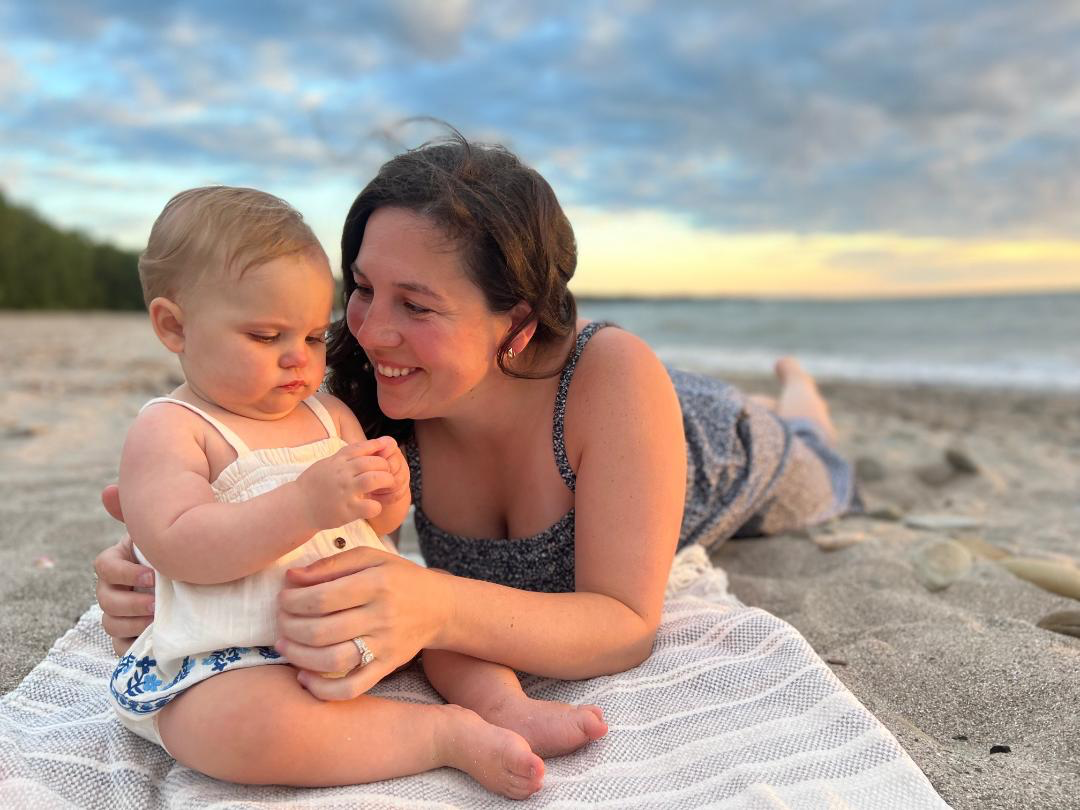
Two in One: A Funeral Director and A Mother

The Purpose of Writing an Obituary